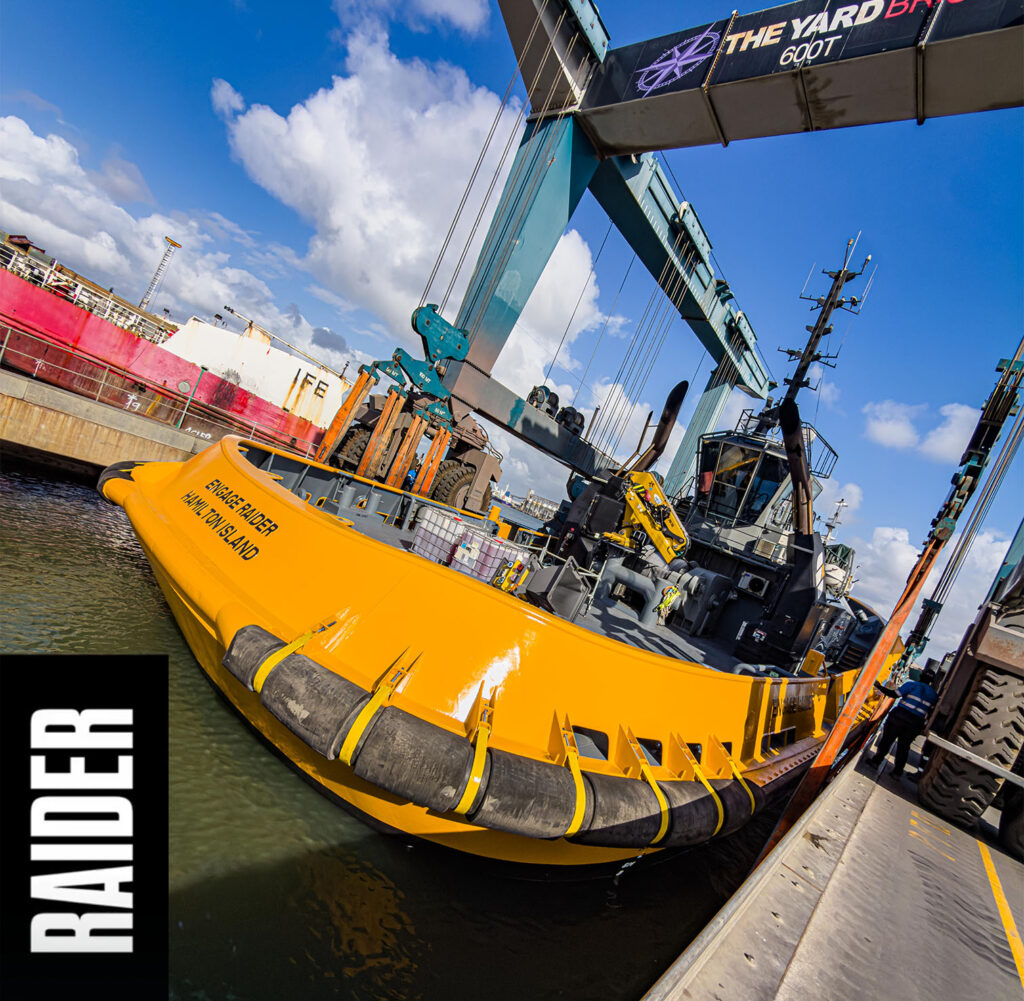
Inside Engage Marine’s three-tug docking program at The Yard Brisbane
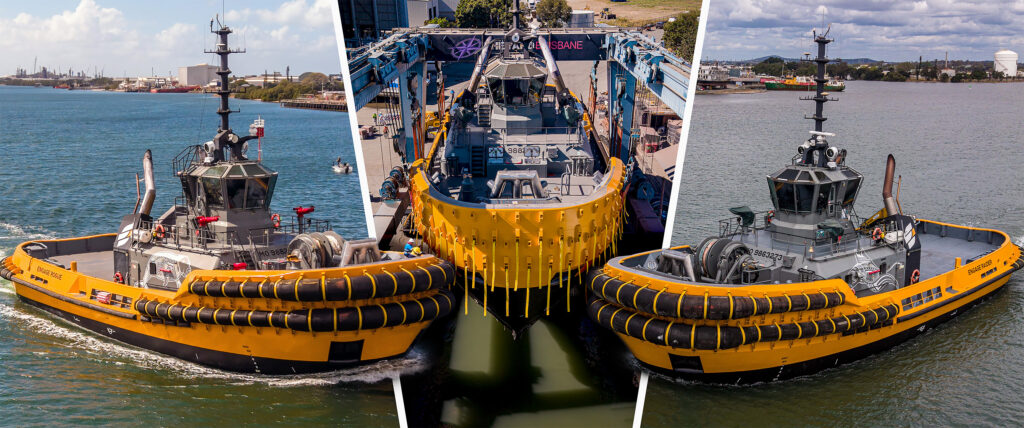
Three sister tugs have brought a substantial program of survey maintenance, engineering and vessel improvements to The Yard Brisbane.
Engage Rogue, Engage Raider and Engage Rebel, all Damen ASD Tug 3212 vessels, have attended TYB for their first five-year special surveys. With Rogue and Raider’s dockings completed and Rebel’s docking underway, the program has allowed our project division to carry knowledge and practical lessons from one vessel into the next.
Working closely with Engage Marine’s Chief Engineer, TYB has coordinated the specialist activities, yard services and reporting needed to manage the work through each docking.
Managing a broad maintenance scope
The program has brought together underwater inspections, propulsion servicing, machinery maintenance, winch work and coatings, alongside repairs and owner-requested additions.
Delivering that scope requires attention to how individual tasks fit together. Equipment must be removed to provide access, inspections can identify additional work, and fabrication needs to be completed before surrounding areas are painted and machinery reinstated.
TYB’s project division has managed those dependencies throughout the program. Findings from the earlier dockings have informed preparations for subsequent vessels, helping the team anticipate requirements and refine the sequence of work.
Daily reporting and docking documentation have supported communication with Engage Marine, while variations have recorded additional requirements as the work developed.
Propulsion and machinery maintenance
Propulsion work has formed a significant part of the program, bringing together thruster servicing, propeller inspections, seal renewal and associated engineering support.
The work has included propeller polishing and pitch checks, non-destructive testing of propellers and stub shafts, and shaft-alignment work afloat. Main-engine and generator servicing has been coordinated alongside maintenance of pumps, fans, hydraulic systems and electrical equipment.
The vessels’ box coolers presented a distinctive access requirement. Lowered through the bottom of the hull, the coolers could be removed for cleaning before reinstatement and pressure testing. Planning that work around hull preparation and coatings was an important part of the docking sequence.
Winch maintenance and targeted repairs
The forward towing winches have provided another substantial area of work, involving removal, dismantling and attention to components that cannot be reached with the equipment assembled.
Work within the program has included replacement bearings, brake and clutch refurbishment, hydraulic servicing and the fabrication of stainless-steel seal-carrier plates to address corrosion around the original components.
The dockings have also created opportunities to inspect areas normally concealed by equipment and fenders. Repairs and fabrication have been incorporated into the wider scope, alongside improvements to drainage and other vessel fittings.
These tasks demonstrate the value of combining planned survey maintenance with the capacity to respond to findings once a vessel is opened up for inspection.
Coatings informed by operating experience
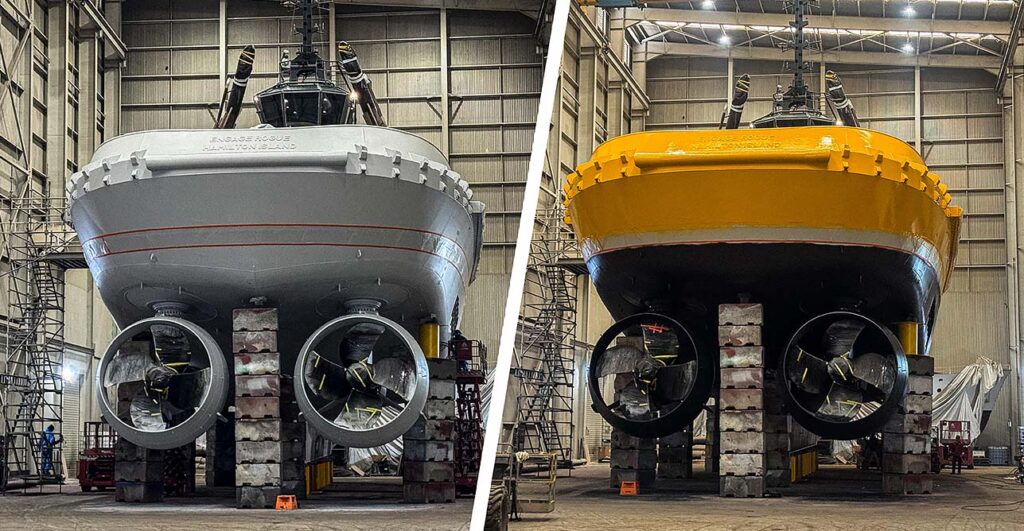
Hull, deck and topside coatings have been a major part of the program, covering surface preparation, protective coatings and antifouling, as well as the vessels’ distinctive yellow, grey and black finish.
The painted waterline has been raised across the three vessels to address marine growth occurring above the previous coating boundary during extended periods at moorings. It is a practical change informed by how the tugs operate.
The scope has also extended to smaller components, including gratings, vent heads and deck machinery, requiring coordination between workshop maintenance and the main vessel coating schedule.
Refining access and reinstatement
The tugs’ large, double-stack cylindrical fenders introduced challenges in handling, access and reinstatement. Their size, combined with tidal restrictions, required careful preparation for work alongside.
The team refined its approach between vessels, arranging equipment and infrastructure ahead of arrival, including a barge-mounted elevating work platform for fender work afloat.
That experience has helped shape preparations for the later dockings. Familiarity with the vessels has also improved the team’s understanding of trade interfaces, equipment movements and reinstatement requirements.
Carrying the experience forward
With Engage Rebel’s docking continuing, the program remains an active example of collaboration between the vessel crews, Engage Marine’s Chief Engineer and TYB’s project team.
Across the three dockings, the work demonstrates the breadth of commercial vessel capability available at The Yard Brisbane. It also shows the role of our project division in connecting inspections, engineering, coatings and supporting services into a coordinated docking program.
Contact The Yard Brisbane’s project division to discuss your next tug docking, survey maintenance or vessel improvement project.
The team behind the program
Engage Marine
Chief Engineer, vessel crews and owner representatives
The Yard Brisbane
Project management, docking, yard services and trade support
Coatings
GT Mac · AkzoNobel International Paint
Propulsion and machinery
Kongsberg · Hastings Deering · RL Marine · SKF Australia
Mechanical and hydraulic services
Halliday Engineering · Gateway Hydraulics
Electrical services
Bowmar Electrical · WTM
Fabrication and steelwork
Lumark
Fenders, anchors and chains
Harrap Marine Industries
Cranage and berthing support
Universal Cranes · Bhagwan Marine · Harrap Marine Industries
Access and scaffolding
MAQ Scaffolding
Fuel handling and specialist cleaning
DHM Services
Testing and safety inspections
AMAP Engineering · AMO Aaron Marine Offshore Australia
Ducting and glazing assessment
Marxcraft · Integ Marine